

INTERVIEW WITH THE VAMPIRE

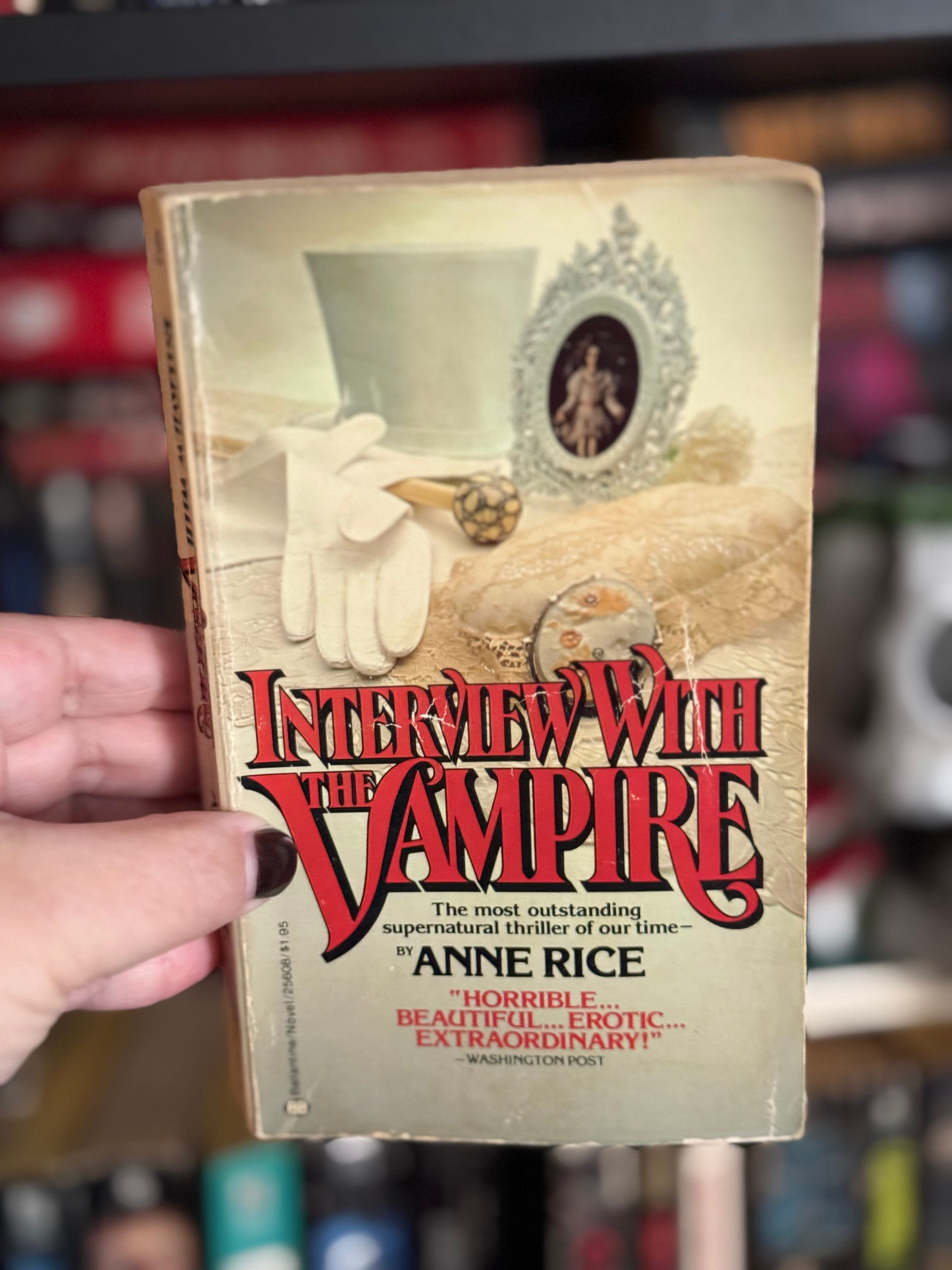
Anne Rice’s INTERVIEW WITH THE VAMPIRE is somehow everything I thought it would be and nothing like I thought it would be all at the same time. The structure of IWTV is incredibly unique; the interview format allows you to be completely immersed in Louis’ story, but it also serves as a reminder that these are Louis’ words, his version of the story, and with every story there are 2 sides (sometimes more), and most people are often unreliable narrators even if their intent is pure.
Rice’s prose is beautiful, dark, and moving. Louis’ depiction of New Orleans, Paris, the Théâtre des Vampires, is incredible world-building. You feel as though you are in the room with Louis, hearing his story, watching him recount this experience. The viciousness of the kills, especially those from Lestat, are horrific and terrifying. And yet, nothing about IWTV feels gratuitous; it feels as though every piece of this story is something we must just accept, it is how it is. Yes, we can feel for these characters and to some extent understand their motivations and their actions, but it doesn’t feel like Rice is forcing us to arrive at that point. While I’ve seen criticisms of IWTV that it sometimes feels difficult to get through, I often felt that Louis’ story being in a bit too drawn out in some places, too short in others, too emotional at times and not emotional enough at others adds a layer of realness to his story; how often do we listen to our friends or strangers tell us a story only for us to feel they are skipping over the interesting parts or lingering on details that seem minor? Is this another aspect of being mortal, a human that Louis is parroting and clinging to?
The context of Rice’s own real-life grief helped me to understand this story even more. Claudia is an extremely complex character; a child who emotionally and mentally becomes a woman but is trapped in her child body, powerful and strong but dependent on Louis because of her childlike state. A state that she was forced into, and her anger towards Lestat and sometimes Louis is understandable.
At the heart of IWTV, to me, are questions around loneliness, mortality, humanity, and ultimately what is good and what is evil. What will our loneliness cause us to do? How does desperation manifest? If there is no God, what is the meaning of life, and what are we meant to do with this one life we have? Without God, what is the meaning of good and evil? Can you remain “good” if your nature is considered evil? Are “evil” actions justified, and at one point are we considered damned? If Louis clings to his humanity, but what he has become cannot be classified as “good,” then what does that make him?
I am going to continue my journey through THE VAMPIRE CHRONICLES, and I’m very excited to see what comes next. Oddly, reading IWTV gave me a new appreciation for the TV show. I’m hoping to finish book 2 before the next season airs.